
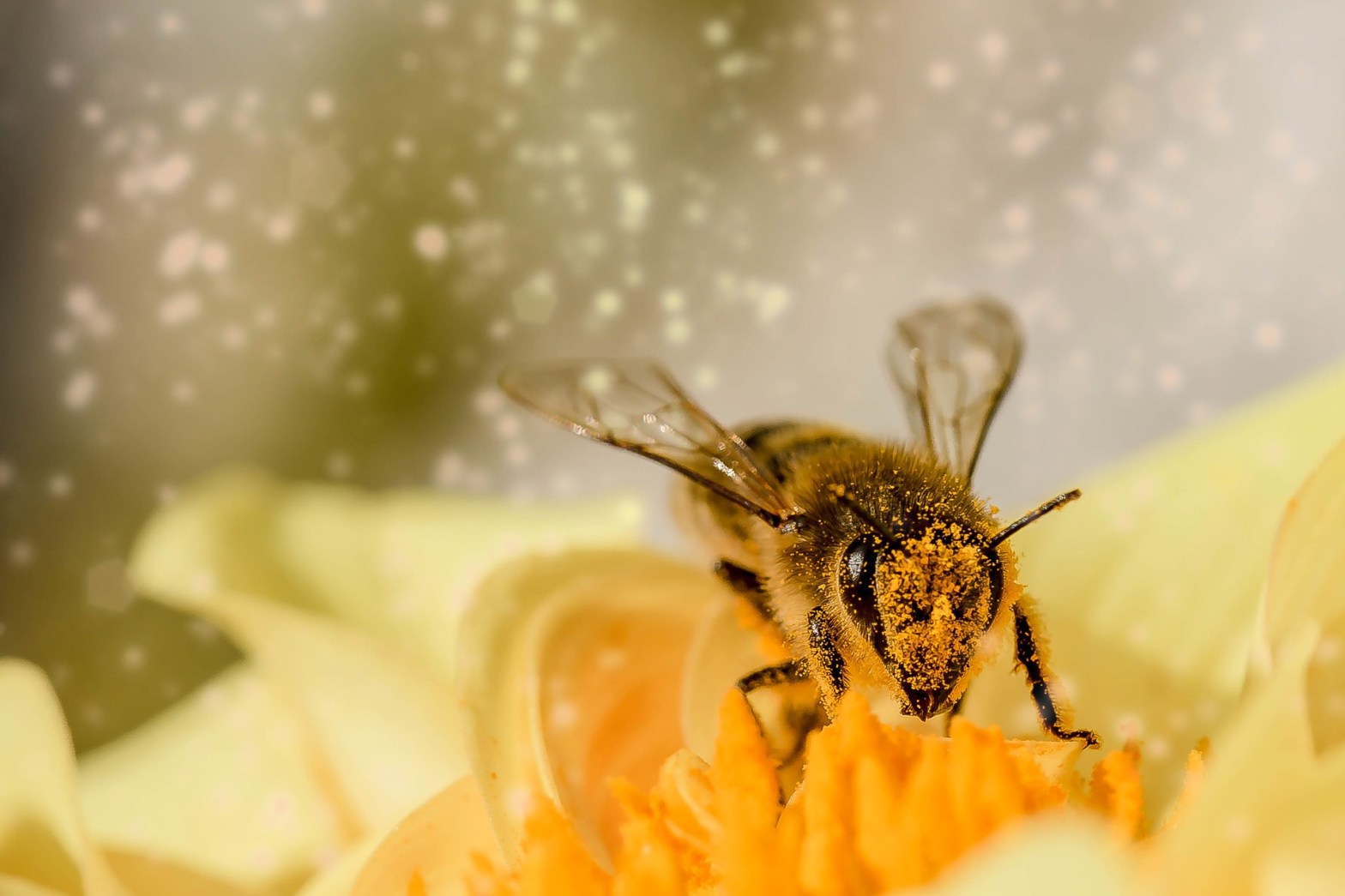
Beekeepers will tell you how they whisper to the bees, telling them their news, sharing information. And they will tell you too, how they listen to the bees, for the bees carry messages from the ancient ones.
So today, 20 May, we celebrate World Bee Day. This is a day, declared by the United Nations, set aside to create awareness of the importance of bees (and other insects) as pollinators, and to flag the threats they face.
These tiny, yet critically important creatures, have been part of the world’s ecosystem for more than 100 million years. Their role is so important to earth, pollinating (along with butterflies) 75% of the world’s flowering plants.
Bees produce honey as food and as medicine; they help crops to grow and play a role in balancing global ecosystems and supporting biodiversity; and they are even used by scientists as models in how hives operate and communicate.
Yet, they mean much, much more.
Bees are creators, they are dancers, they sing, they communicate, they share joy – and allow us to stop and share in the wonders of the natural world.
They also symbolise many things, from working together for the greater good to carrying messages from spirit. They stand for cooperation, strength, wisdom and hard work.
Stories about bees cross all continents and all cultures, often seen as creatures linked to the divine or to magic.
Dreamtime
They feature in the first Dreamtime story from Australia to the myths of the Celts, from the ancient tales of the Greeks to Hindu legends.
In the ancient Near East and India, the bee was the sacred messenger between the natural world and the spiritual, while in Minoa and Mycenea, the bee represented Potnia – a goddess of mysteries, called the Pure Mother Bee. Her priestesses were named Melissa, meaning bee. Other priestesses, for Artemis and Demeter, were also known as bees, as were the Delphic priestesses.
The bee plays a role in the first story of Jabreen, a god from the Dreamtime of the Kombumerri people. When Jabreen stepped out of the Milky Way he saw the land without form and created rivers mountains and hills. As he grew hungry, Jabreen searched for food, coming across wild bees. He stopped to feast on their honey.
In Egypt it is said that bees grew from the tears of Ra, while in southern Africa the San people tell of how Bee carried Mantis across a river. Bee searched and searched for dry ground. Exhausted, Bee finally found a flower floating on the water, where he placed Mantis. While doing so, Bee planted a seed in Mantis before dying. That seed become the first human.
Blue bee
Hindu deities Indra, Krishnu and Vishnu are known as the nectar-born ones, and Vishnu’s symbol is the blue bee on a lotus flower, representing life, resurrection and nature. On the other side of the planet, Ah-Muzen-Cab was a Mayan god of bees and honey.
In the religions of the Book, Christianity, Judaism and Islam, the bee and its honey have great significance. Israel is described as the land of milk and honey: archaeologists have found evidence of beekeeping in the region dating back 3 000 years. In Christianity, the bee is seen as a symbol of Christ’s attributes, while Chapter 16 of the Quran is called The Bee.
What the world is telling us is that we cannot live without bees.
So, if you see a bee on your travels, stop a while and give thanks for their blessings.
 alstarlife.blog